

Keeping Your Salesforce Data Safe with Sandbox Seeding
What is Salesforce sandbox seeding, and why does your enterprise need it?
Salesforce sandboxes play a crucial role in testing and releasing code. Think of them as dedicated environments for your developers, contractors, and partners to work their magic, while keeping the integrity of your production data intact.
The core value of Salesforce sandbox seeding is to strike a balance between accelerating Salesforce development and effectively managing data. Sandbox seeding is the process of populating a sandbox environment with representative, high-quality data — often sourced and anonymized from production — so developers have realistic datasets to work with without ever exposing real customer information.
The ideal sandbox seeding solution empowers you to reuse high-quality data from your production or full copy sandbox. Securing and using anonymized source data — such as a full copy sandbox prepared with a Data Anonymizer tool — is a critical step in your seeding process and a significant time saver for development teams.
Sandbox seeding can be much more intricate too. It's more than just a data transfer; it's about having complete control over the order of data operations to deliver a seamless experience for your developers and give them the most realistic environment to work in.
But, it's not a one-size-fits-all deal — there are four types of Salesforce sandboxes.
Types of Salesforce Sandboxes
Data within Salesforce sandboxes can vary significantly, ranging from small datasets to complete replicas of your production data. Let's explore the four different kinds:
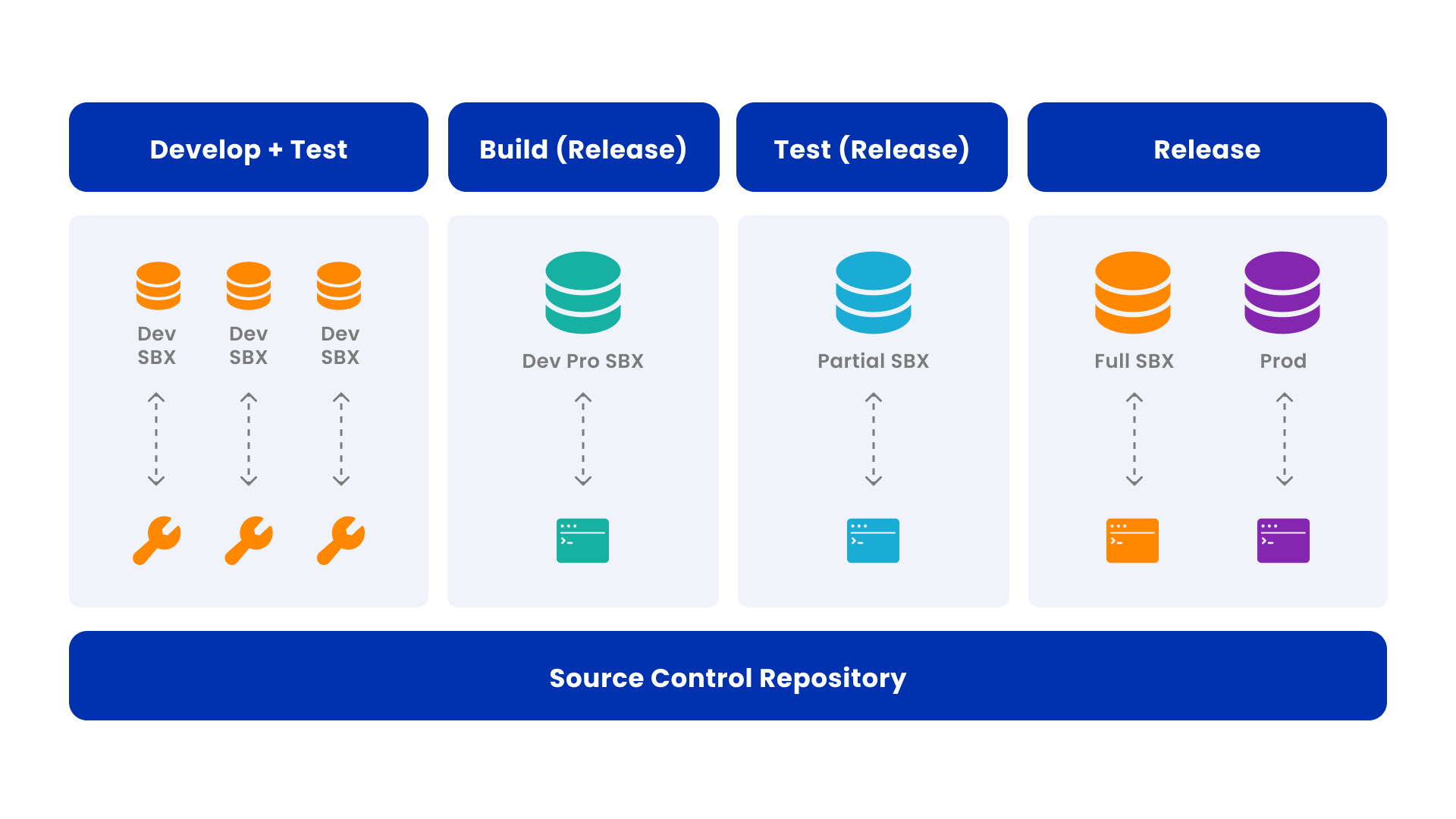
Developer Sandbox
Just the basics. This is for bare-bones development needs with limited data for development purposes.
Developer Pro Sandbox
Like the Developer sandbox, but with a bigger sample of data to play with, allowing you to replicate complex data from your production environment. It is the most commonly used type among customers.
Partial Sandbox
Not a full copy, but enough real production data for solid testing. It can be refreshed from your production environment, providing up-to-date information. Note: partial sandboxes may contain real PII and must be properly masked or anonymized before use in development to avoid compliance violations.
Full Sandbox
Your production data's identical twin — used primarily for training, final testing, and release processes. If full sandboxes contain 100% of production data, Salesforce sandbox data protection is a critical requirement.
How Does Sandbox Seeding Improve Salesforce Development?
There are two ways that sandbox seeding improves development processes: speed and security.
Speed
One of the biggest impacts on developers' ability to execute effectively is the amount of time it takes to identify and obtain accurate representations of business data. Delays in accessing reliable data can result in expensive project setbacks and be detrimental to quality.
Automated Salesforce sandbox seeding eliminates manual data preparation, reduces project delays, and lets development teams ship faster with higher-quality test data. Dedicated testing environments allow developers to work efficiently and deliver new features without disrupting the live production system.
Security
As enterprises expand their use of Salesforce beyond basic CRM functionalities to mission-critical applications, they face heightened scrutiny and must proactively manage risks. Development environments have often been identified as a significant blind spot when it comes to Salesforce data protection.
The isolated environments that Salesforce sandboxes provide enhance security by preventing potential disruptions to the live production system. However, data within the sandboxes — particularly in partial and full copy versions — must be properly protected to prevent breach of Personally Identifiable Information (PII). This is where sandbox data masking and anonymization become essential.
Enter Odaseva's Sandbox Seeding solution — a versatile approach capable of handling multiple complex tasks in your seeding process. It lets you reuse high-quality test data from production or full copy sandboxes and anonymize it as part of your seeding workflow.
Going Beyond the Basics with Odaseva
Odaseva takes Salesforce sandbox data protection to the next level by giving you the power to automate complex data tasks like handling intricate data models, managing package data, and running scripts. It's not just about moving data from A to B — it's about putting you in the driver's seat, overcoming Salesforce's native limitations, and providing a seamless experience for your developers.
Unmatched Security
Our Sandbox Seeding solution populates each developer sandbox with just the right data, no matter how complex your data model might be. Odaseva is a no-view provider — we can't see your data, so your sandbox and production data stay private and confidential at all times.
Optimal Performance
Odaseva uses AI-driven API consumption prediction and limitation to help you avoid exceeding Salesforce limits. This is a significant advantage for frequent sandbox data refreshes, helping you work around the 30-day refresh limit on full copy sandboxes. Just pull data from your production environment to keep your sandbox data fresh and keep the path clear for your developers.
Simplified Complexity
Our user-friendly, no-code interface lets you seed sandboxes with even the most complex data models, including unlimited parent-child relationships and advanced granularity. This means you can define your data structure and metadata for a carbon copy of your production environment. Aligning metadata with production also lets you keep an eye on differences and migrate changes seamlessly.
Expertise and Support
We specialize in recreating any Salesforce data model — whether it's custom objects or managed packages — to tackle potential obstacles head-on when it comes to populating your sandboxes.
The Bottom Line
Odaseva's Sandbox Seeding solution is your secret weapon for precision, control, and top-notch Salesforce sandbox security. You can run your tests with confidence, speed up release cycles, protect customer data, and navigate complex data models without breaking a sweat.
For more information visit Odaseva’s Sandbox Seeding page here.
Frequently Asked Questions
What is Salesforce sandbox seeding?
Salesforce sandbox seeding is the process of populating a Salesforce sandbox environment with data — typically sourced and anonymized from production — so developers and testers have realistic datasets to work with without accessing real customer PII.
What are the 4 types of Salesforce sandboxes?
The four Salesforce sandbox types are: Developer (minimal data), Developer Pro (expanded data for complex models), Partial (a subset of production data), and Full (a complete copy of production, used for final testing and training).
Why is Salesforce sandbox data protection important?
Partial and full copy sandboxes can contain real customer data, including PII. If this data is not properly masked or anonymized before seeding, you risk GDPR, CCPA, or HIPAA violations, especially if external developers or contractors have access.
How does sandbox seeding improve developer productivity?
Sandbox seeding automates the delivery of accurate, representative test data to developers. This eliminates manual data preparation, reduces delays from unrealistic datasets, and allows teams to ship new features faster and with fewer bugs.
Can Salesforce sandbox seeding handle complex data models?
Yes. Enterprise sandbox seeding solutions like Odaseva support unlimited parent-child relationships, managed packages, and custom objects — enabling you to replicate even the most complex Salesforce data models in a secure, controlled way.
Get in touch for a personalized demo today.
View other stories

Ransomware Attacks Targeting SaaS Data

4 Ways Transportation Leaders Are Securing and Managing Salesforce Data at Scale

How Re-using your Backup Data can Transform the Consumer Goods Industry


